Fluidised bed boilers (CFB/BFB) are widely used in energy production because of their high efficiency, low emissions and ability to burn different fuels. Bed cooler coils are among the most critical components supporting safe and efficient operation.
What Is a Bed Cooler Coil?
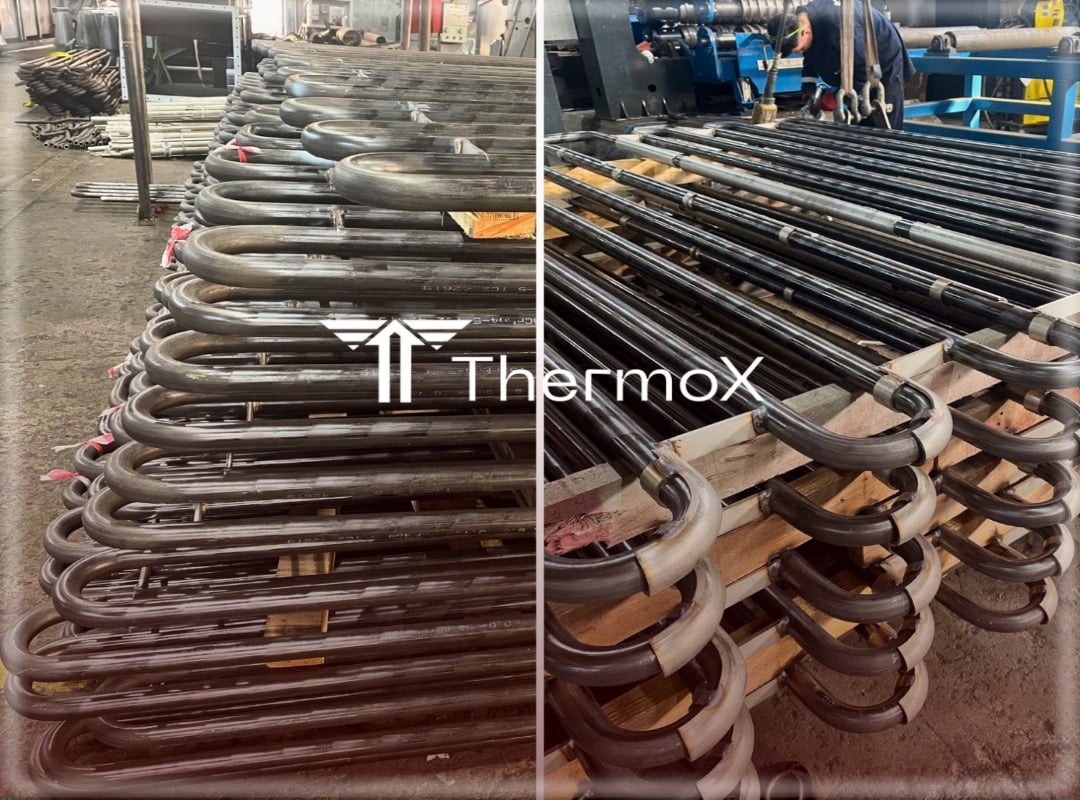
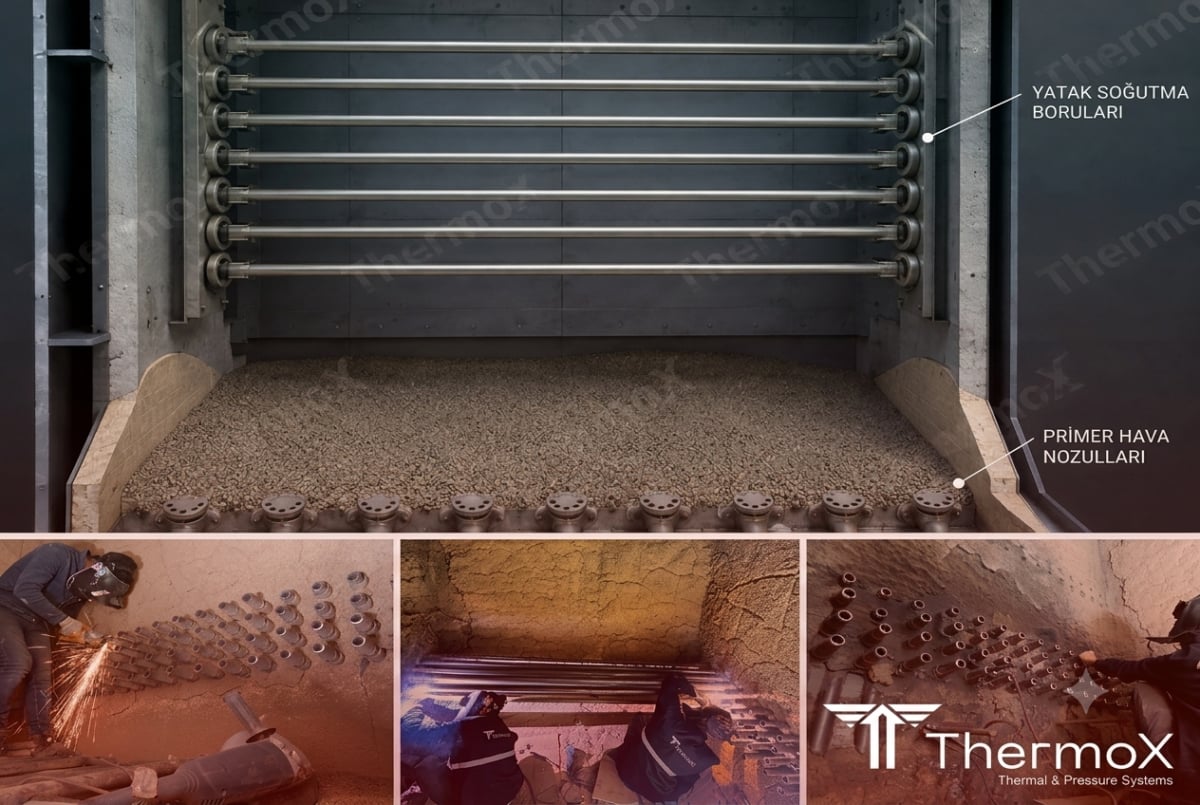
A bed cooler coil is a tube bundle positioned within the high-temperature fluidised mixture of sand, ash and fuel particles. Boiler water or natural-circulation water passes through these tubes to recover excess heat from the bed.
This produces additional steam while keeping the bed temperature within a safe operating range.
Why Is It So Important?
The target bed temperature in a CFB boiler depends on fuel properties, boiler design and the manufacturer's operating limits. Keeping this temperature under control is important for:
Stable combustion,
Efficient use of fuel,
Longer refractory life,
Maintaining low NOₓ emissions,
Improved boiler efficiency
and is essential to these operating objectives.
Bed cooler coils help maintain this balance by continuously extracting excess heat.
Operating Principle
The high-temperature fluidised bed material produced during combustion continuously surrounds the outer surfaces of the coil tubes. Heat passes through the tube wall into the water, and this energy is used to produce steam.
The system therefore provides both temperature control and highly efficient heat recovery.
Common Problems
Bed cooler coils are exposed to some of the harshest operating conditions in CFB boilers. The constantly moving, abrasive bed material can cause various forms of damage over time.
The most common problems include:
Wall thinning due to erosion,
Tube perforations,
Wear around elbows,
Thermal fatigue cracks at welds,
High-temperature corrosion related to fuel characteristics.
If these defects are not detected in time, they can cause unplanned shutdowns, loss of capacity and substantial maintenance costs.
Why Are Periodic Inspections Necessary?
Detailed inspections during planned maintenance allow potential faults to be detected early. The work generally includes:
Ultrasonic wall-thickness measurements (UT),
Visual inspections,
Weld inspections,
Hydrostatic tests,
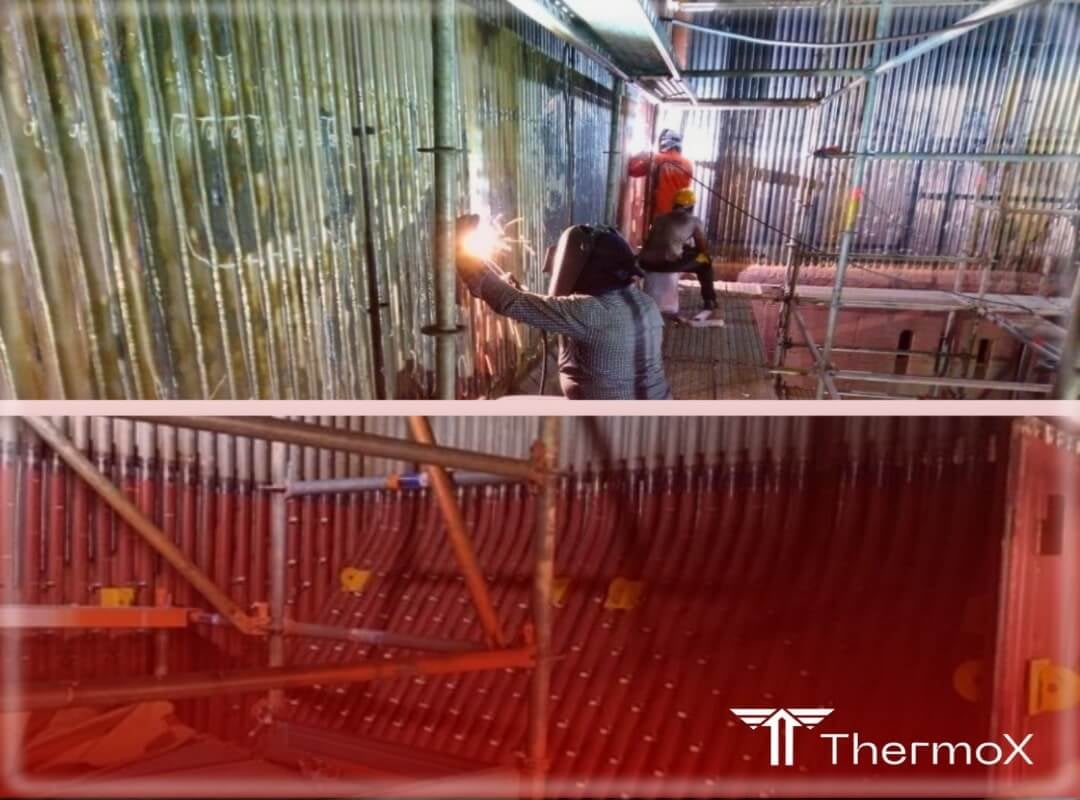
Replacement of damaged coils or elbows,
Inspection of supports and hangers
as part of the maintenance programme.
Regular maintenance extends equipment life, reduces the risk of unplanned shutdowns and improves operating reliability.
Conclusion
Bed cooler coils in fluidised bed boilers are a critical system that directly affects combustion stability, boiler efficiency, emissions performance and equipment life, as well as providing a heat transfer surface.
Correct design, manufacture to applicable standards, regular inspection and rehabilitation based on engineering principles when necessary are therefore essential to safe, efficient and continuous plant operation.
At ThermoX Engineering, we provide engineering-led solutions for fluidised bed boiler bed cooler coil replacement, pressure-part rehabilitation, high-pressure welding and planned major outage management.
Where thermodynamic knowledge meets field experience.
Frequently Asked Questions
What Is a Bed Cooler Coil?
A bed cooler coil is a tube bundle positioned within the high-temperature fluidised mixture of sand, ash and fuel particles. Boiler water or natural-circulation water passes through the tubes to recover excess bed heat. This produces additional steam while keeping the bed temperature within a safe operating range.
Why Is It So Important?
The target bed temperature in a CFB boiler depends on fuel properties, boiler design and the manufacturer's operating limits. Temperature control is important for stable combustion, efficient fuel use, longer refractory life, low NOₓ emissions and improved boiler efficiency. Bed cooler coils continuously extract excess heat to maintain this balance. Hot fluidised bed material surrounds the coil tubes, transferring heat through the tube walls to the water for steam production. This provides temperature control and efficient heat recovery. Coils experience some of the harshest conditions in CFB boilers: constantly moving abrasive material can cause erosion-related wall thinning, perforations, elbow wear, thermal fatigue cracks at welds and fuel-related high-temperature corrosion. Undetected damage can cause unplanned shutdowns, capacity losses and substantial maintenance costs.
Why Are Periodic Inspections Necessary?
Detailed inspections during planned maintenance allow potential faults to be detected early. They generally include ultrasonic wall-thickness measurements, visual and weld inspections, hydrostatic tests, replacement of damaged coils or elbows and inspection of supports and hangers. Regular maintenance extends equipment life, reduces unplanned shutdown risk and improves operating reliability.