Baghouse differential pressure rises when resistance across the filter increases or when more gas flows through it. Dust buildup, inadequate cleaning, and condensation can all increase that resistance. Start by comparing differential pressure readings at similar gas flow rates and process loads. Then verify the pressure reading and check how the filter responds to a cleaning cycle.
What does baghouse differential pressure tell you?
Differential pressure (ΔP) is the difference between the pressure measured on the dirty-gas side and the pressure measured on the clean-gas side. It reflects the resistance the gas encounters between those points, including the filter fabric, the layer of dust on the bags, and other restrictions within the measured section. Check the units before comparing readings. Depending on the instrument, the display may use pascals, millibars, or inches of water gauge.
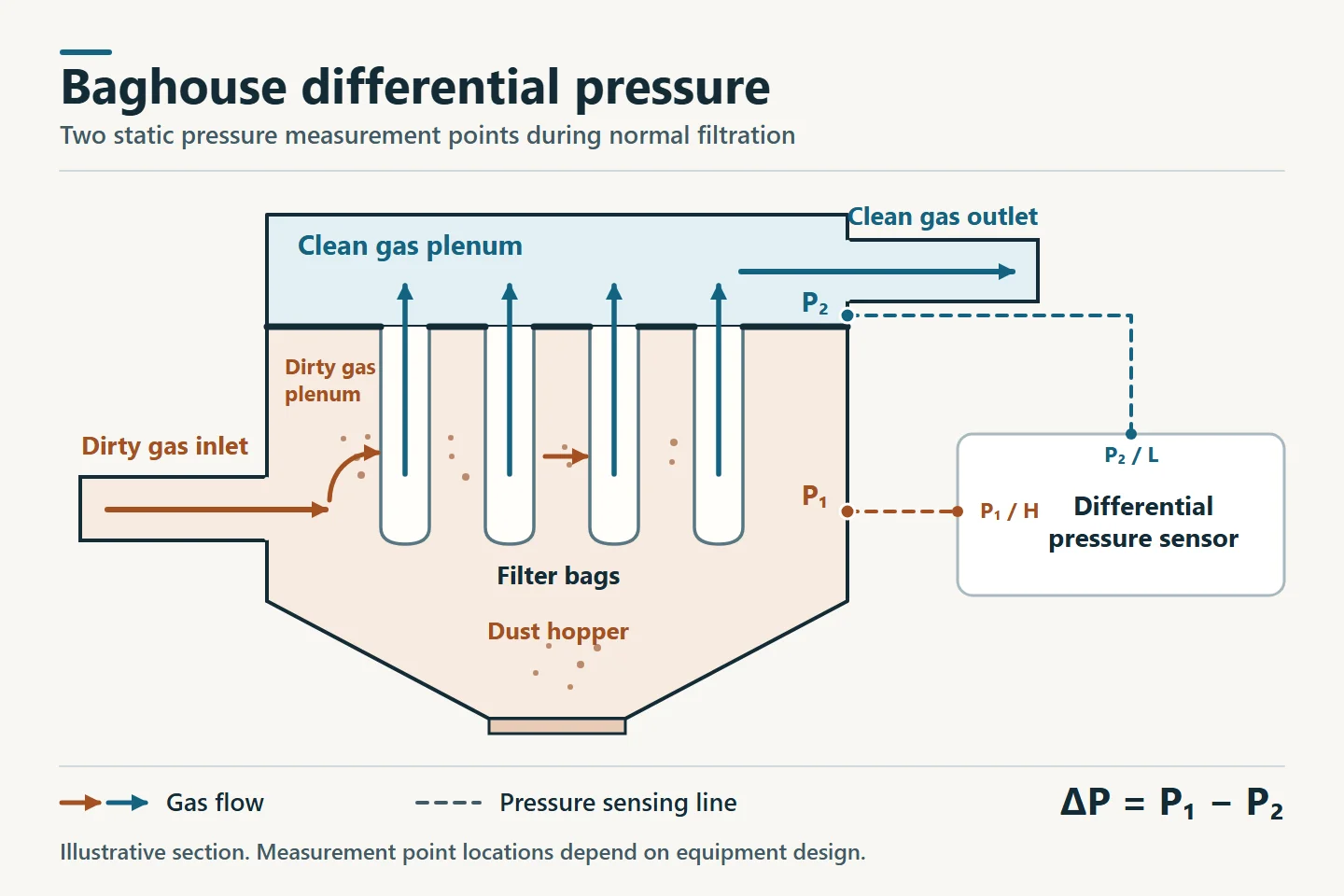
The layer of dust on the bags, often called the dust cake, contributes to filtration. As it builds up, pressure drop can rise. In a pulse-jet baghouse, track how far ΔP falls after a cleaning cycle at a comparable gas flow rate. A post-cleaning reading that rises from shift to shift can be more informative than a single high reading.
What causes high differential pressure in a baghouse?
Compare dust loading, cleaning performance, gas flow, and inlet temperature to narrow down the cause of a high reading.
Higher dust loading or buildup. More dust entering the collector, or a hopper that fails to discharge properly, can increase the load on the bags. Compare the ΔP trend with production records and any hopper level alarms.
Ineffective pulse-jet cleaning. A problem with the compressed-air supply, controller, or pulse valves can leave more dust on the bags. Compare the timing of the cleaning command with the air pressure and valve activity records.
Higher gas flow. More gas moving through the same filter area can increase pressure drop even when the bags are in the same condition. If ΔP rose after a change in fan speed, damper position, or production load, check the measured flow over the same period.
Condensation and plugged filter media. Condensation can occur if the gas or the surfaces it contacts cool below the relevant dew point. Damp dust can stick to the bags and become harder to remove with cleaning pulses. Review temperature records around startup and shutdown.
When the reading conflicts with other operating records, include the differential pressure sensor and its sensing lines in the review. Dust or moisture in a sensing line can affect the reliability of the displayed value.
How can you distinguish a sudden spike from a gradual rise?
Identify when the rise began and line up the process, fan, and cleaning records for that period. If ΔP rises when the fan speeds up and falls when gas flow returns to its earlier level, investigate the flow change first. If the post-cleaning reading keeps climbing at comparable flow, examine cleaning performance and buildup on the bags.
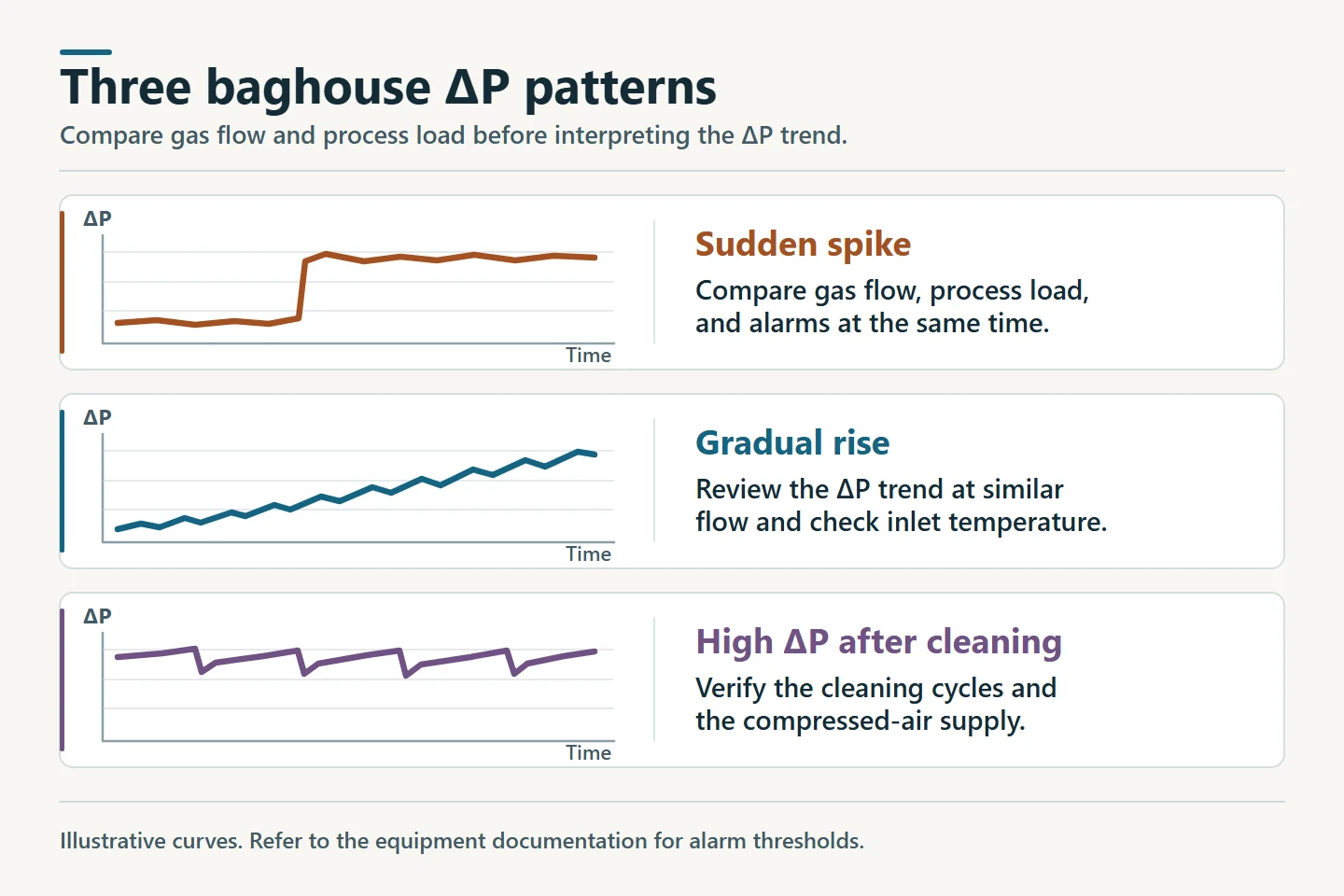
What you observe | Possible cause | Records to compare first |
|---|---|---|
ΔP spikes suddenly | Gas flow or process load changed, cleaning stopped, or the sensing line developed a fault. | Event timestamp, gas flow, fan speed, cleaning alarms, and sensor alarms |
ΔP rises gradually at similar flow | Dust buildup is increasing or the filter media is progressively plugging. | Shift-by-shift ΔP trend, inlet temperature, and post-cleaning readings |
ΔP stays high after a cleaning cycle | Compressed-air supply is inadequate, some valves are inactive, or dust is adhering to the bags. | Pre- and post-cleaning ΔP, compressed-air manifold pressure, and valve activity |
What records should you collect before a technical review?
Export the ΔP trend and operating records for the same time window. Note when the rise began and record any nearby changes to equipment settings, process conditions, or maintenance.
Timestamped ΔP readings, units, and the time when the rise began
Measured gas flow and, where available, fan speed or motor current and damper position
Filter inlet temperature, process load, and startup or shutdown times
Cleaning cycles, compressed-air pressure records, and any hopper alarms
Date of the last bag replacement or maintenance, the manufacturer’s operating range, and commissioning records
Conclusion
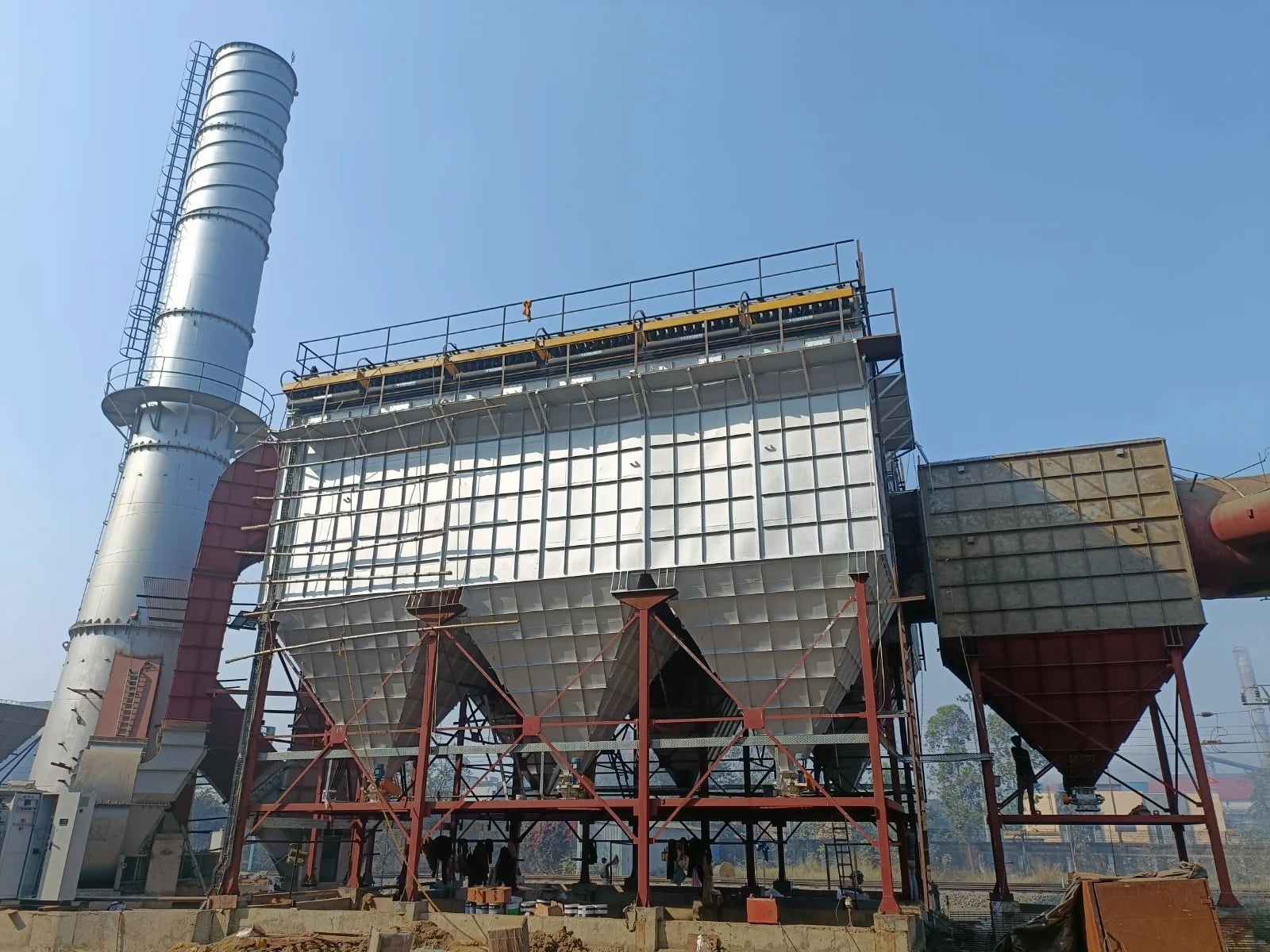
When baghouse ΔP rises, begin with readings taken at comparable gas flow and process load. Then verify the measurement and review how the pressure drop responds to cleaning. If the assessment points to a new filter or a system modification, ThermoX can review the project based on gas flow, temperature, particle properties, and site layout. ThermoX Bag Filter
Frequently Asked Questions
What is a normal differential pressure for a baghouse?
The normal operating range depends on the equipment, gas flow, and process conditions. Use the manufacturer’s specified range and the commissioning records as your reference. Compare the current reading with historical measurements taken at similar flow.
Why does differential pressure stay high after pulse cleaning?
The compressed-air supply may be inadequate, some valves may fail to pulse, or damp dust may be adhering to the bags. Compare pre- and post-cleaning readings at similar gas flow and review valve activity and inlet temperature.
When should you replace filter bags after a high ΔP reading?
Consider replacement after verifying the measurement and cleaning system, if the prescribed cleaning cycle still fails to bring ΔP back into the operating range and the system cannot maintain the required gas flow. Use the manufacturer’s criteria and the physical condition of the bags to make the decision.