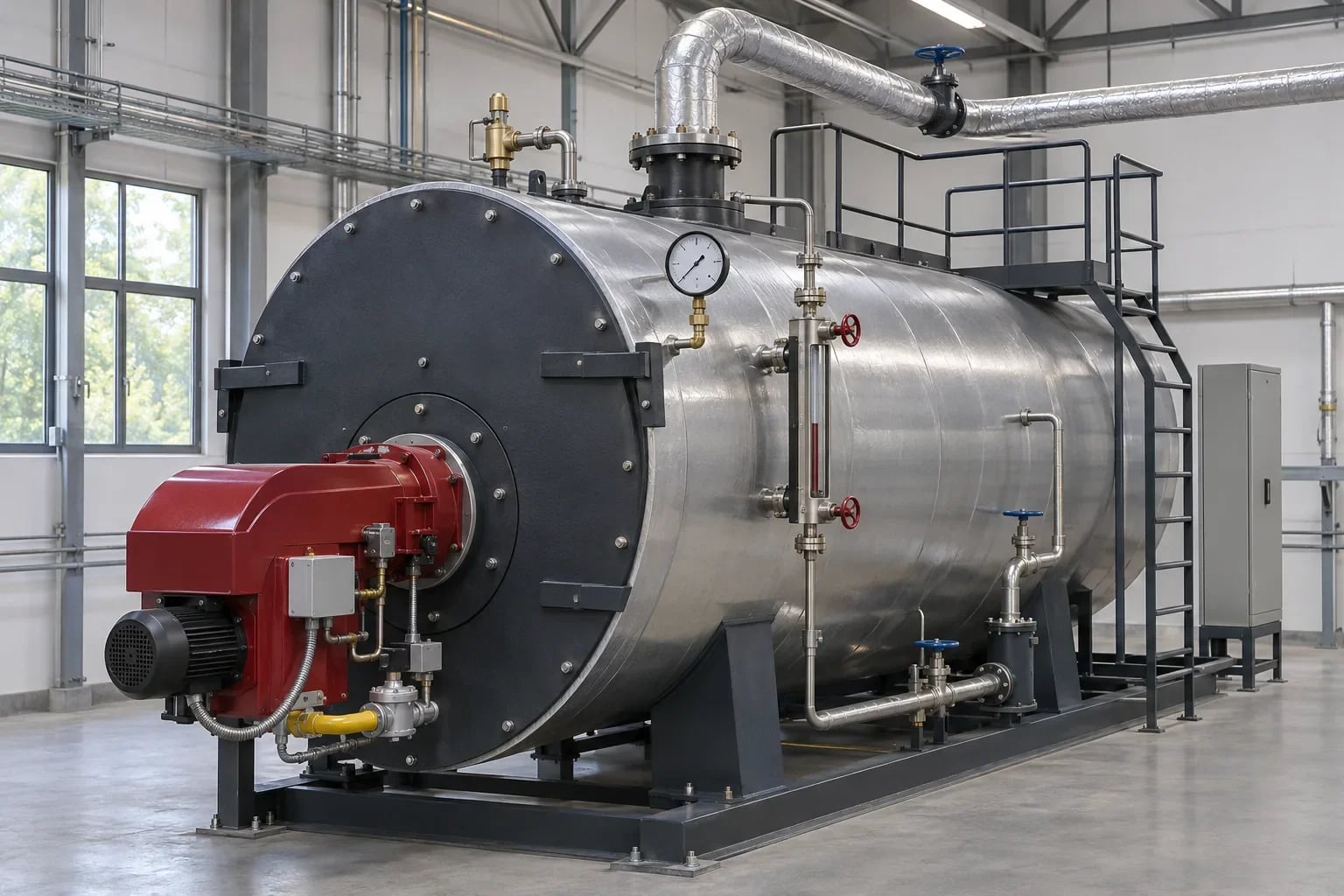
A steam boiler uses energy from a heat source to turn water into steam at specified pressure and temperature conditions. The steam enters a distribution system to serve heating and process requirements in an industrial plant. The boiler's role is to produce the quantity and condition of steam required by the users in a controlled way.
Understanding the system requires looking beyond the boiler shell. Water preparation, feedwater supply, heat input, steam delivery and condensate return form a connected process. This guide explains the basic flow and the relationship between the equipment, without replacing the technical details of individual boiler models.
What is a steam boiler used for?
A steam boiler supplies steam that carries energy to the equipment using it. Applications can include heat exchangers, dryers, heating jackets and other suitably designed process equipment. The steam condition required at each point is determined by the duty of that equipment.
Different users in a production plant may start and stop at different times. Boiler output must respond to the resulting demand. Average consumption, short periods of high demand and the number of users operating together all help describe the plant's requirement.
The availability of steam alone is insufficient to describe the performance of the complete system. Pressure at the point of use, steam condition and the behaviour of the distribution network also matter. The boiler provides the generation stage, while distribution and condensate equipment support the use and return stages.
How does a steam boiler work?
A steam boiler adds heat to water so that it reaches boiling conditions at the operating pressure and evaporates. Fuel-fired boilers obtain heat from combustion. Waste heat boilers can receive energy from an existing hot process gas. In each case, energy must pass into the water to generate steam.
Feedwater is prepared. Water of suitable quality is delivered through the feedwater system.
Heat is generated or received. Fuel combustion or a hot process stream provides the energy input.
Heat crosses the heating surfaces. Shell and tube surfaces take part according to the boiler construction.
Steam is separated and delivered. The boiler arrangement produces steam for the connected distribution system.
Output is controlled. Water level, pressure and relevant combustion conditions are monitored through the specified control and protection arrangements.
The internal arrangement varies with boiler type. A shell boiler containing a substantial water volume and a boiler with water flowing inside tubes do not have the same layout. Identifying the construction is necessary before interpreting an operating diagram.
How do the water, steam and gas circuits differ?
The water and steam circuit follows water entering the boiler and steam leaving it. In a fuel-fired boiler, the gas circuit follows combustion gas from the furnace towards the stack. Heat passes between these sides through the heating surfaces.
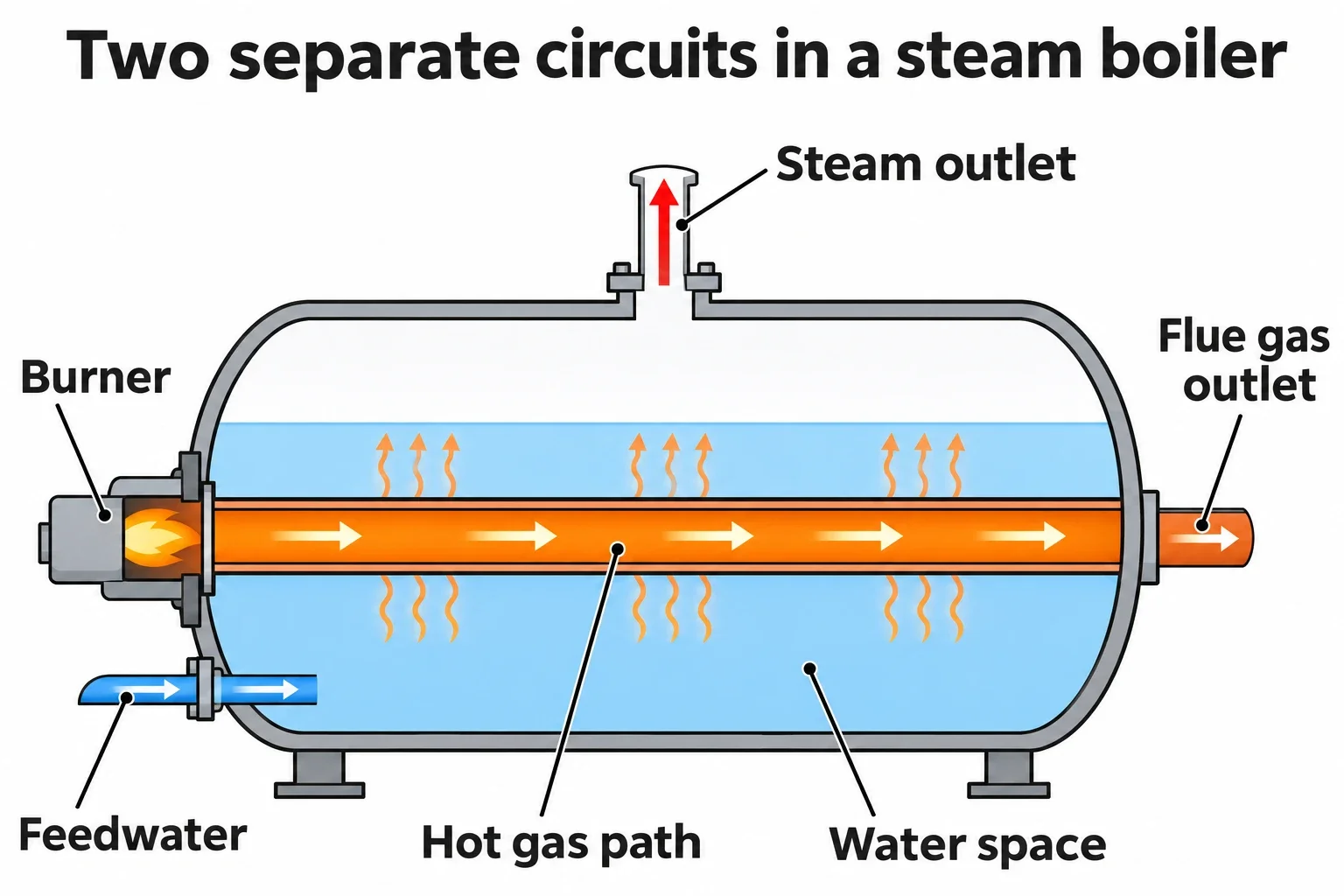
Using different colours for water and gas on a diagram helps explain the equipment functions. The fluid inside the tubes depends on the boiler construction, so drawings for different types should not be read using the same assumption.
In a fire-tube boiler, hot gases pass inside tubes and water occupies the surrounding space. In a water-tube boiler, water travels inside the tubes and receives heat from outside them. This distinction is a starting point for understanding the two main structural arrangements.
What are the main parts of a steam boiler?
The main parts can be described through the duties of supplying heat, transferring heat to water, delivering steam and controlling operating conditions. The groups below explain these functions. Individual boilers do not necessarily contain every component in the same form or location.
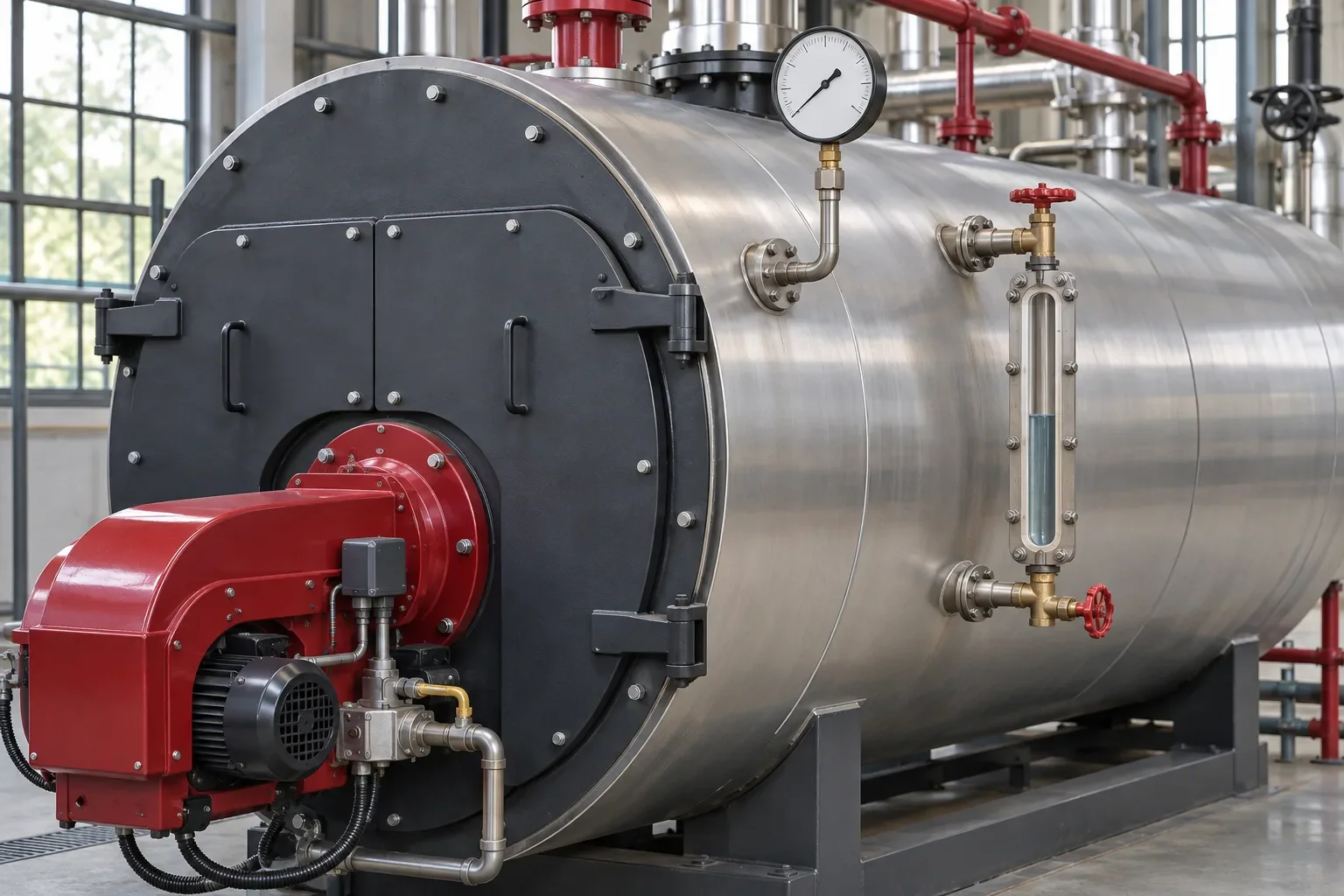
Heat source and combustion section
In a fuel-fired boiler, a burner or solid-fuel combustion system provides the heat input. The furnace is the region in which combustion takes place. Fuel and air supplies must be understood together with the combustion arrangement. A waste heat boiler may instead obtain its energy from hot gas arriving from another process.
Shell, tubes and heating surfaces
The shell and tube arrangement establishes the heat transfer paths and the pressure-containing structure. Fire tubes, water tubes, headers and drums in applicable designs perform different duties. Their names should be read together with the circuit and location shown on the technical drawing.
Feedwater and steam connections
The feedwater pump and associated supply equipment deliver water to the boiler circuit. The steam outlet and related valves provide the connection to steam distribution. Suitable condensate returning from users can be recovered into the feedwater system according to the plant's water preparation arrangement.
Measurement, control and protective equipment
Water level and pressure measurements help describe the boiler's operating condition. Level control, low-water protection, pressure control and safety valves perform different functions. They do not replace one another. Operating limits and the control arrangement must be assessed for the particular boiler design.
When preparing a component list, recording the function beside each item makes the list easier to interpret. This helps distinguish a measuring instrument from a protective device, or a feedwater component from equipment on the steam outlet.
How are steam boiler types classified?
Boilers can be classified by heat transfer construction, heat source and combustion arrangement. These describe different aspects of the equipment. A structural description and a firing-system description may therefore apply to the same boiler.
Classification | Main distinction |
|---|---|
Fire-tube | Hot gas passes inside tubes surrounded by water. |
Water-tube | Water passes inside tubes that receive heat. |
Grate-fired arrangement | Solid fuel burns on a grate system. |
Fluidized-bed firing arrangement | Combustion takes place in a bed fluidized by air. |
Waste heat boiler | An existing hot process gas supplies energy for steam or hot water generation. |
A Scotch-type boiler is an example of fire-tube construction. Reciprocating and chain grate names describe solid-fuel combustion arrangements. Understanding these basic distinctions makes technical discussions clearer before selecting an individual model.
For capacities, pressures and other details of a particular product, refer to the Scotch steam boiler technical information. Values published for a model should not be applied to every type of boiler.
What do capacity, pressure and steam temperature mean?
Capacity describes the mass of steam that can be produced per unit of time under specified conditions. Pressure describes an operating condition of that steam. Temperature is a further property used to establish its state. These values should be specified together.
Capacity is commonly stated in kilograms per hour or tonnes per hour. When reading a capacity figure, ask which feedwater temperature and steam conditions apply. The same steam output can involve different thermal requirements when the inlet and outlet conditions change.
For saturated steam, pressure and saturation temperature are related. Superheated steam has a temperature above saturation at its pressure. A requirement should therefore describe the needed steam state together with the pressure, rather than relying on a pressure figure alone.
Why do feedwater, condensate return and blowdown matter?
Feedwater quality, the suitability of returned condensate and blowdown management influence continuous steam generation and the condition of the heating surfaces. These systems form part of the overall operating arrangement even when they are described as boiler auxiliaries.
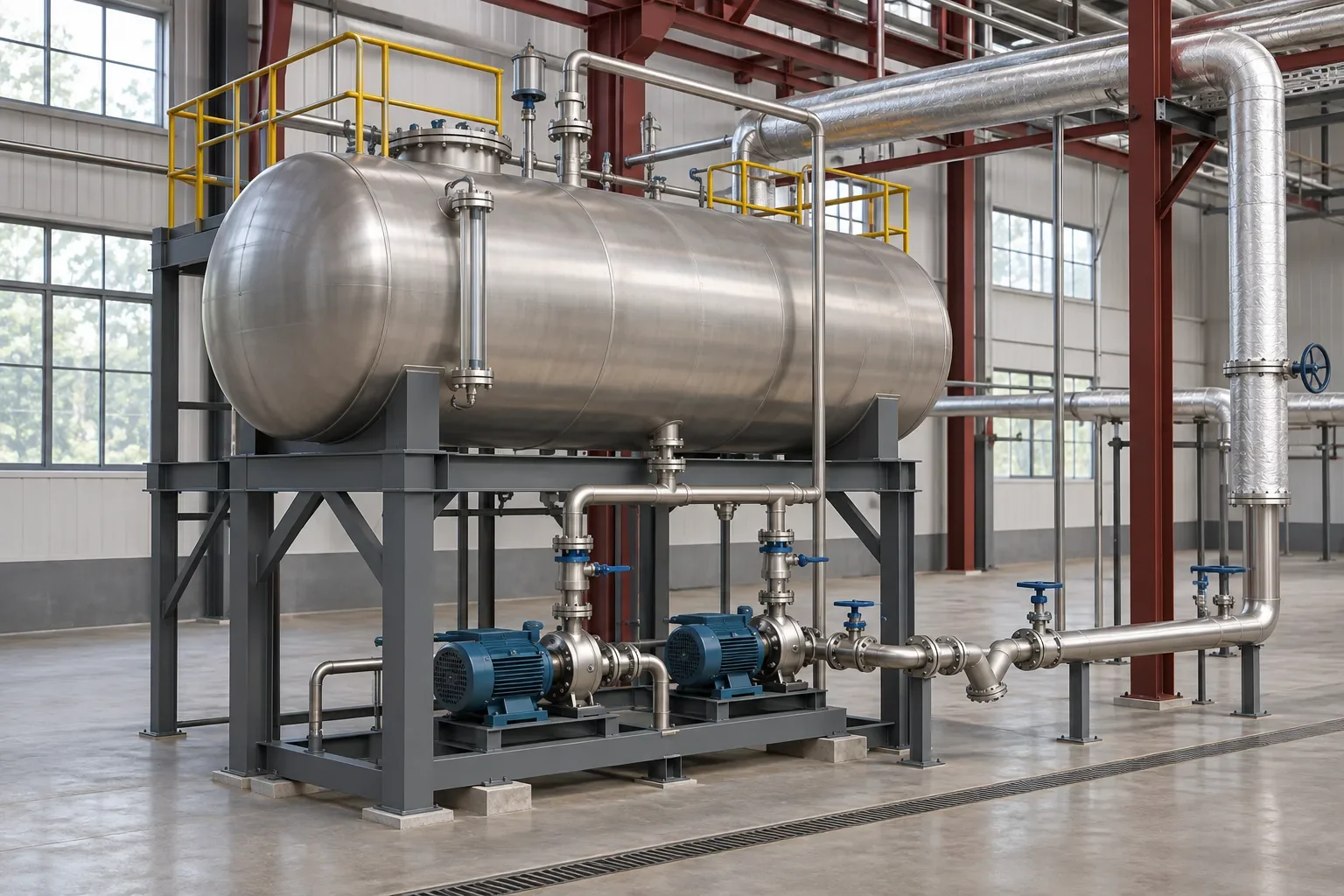
Water preparation is selected from the plant's water analysis and the boiler requirements. Unsuitable water conditions can be associated with deposits, corrosion or boiler water carryover into the steam. The quality of the supplied water must therefore be monitored alongside its quantity.
Blowdown removes boiler water to help manage accumulated material and dissolved solids concentration. Its arrangement and quantity depend on plant conditions. Condensate recovery also requires consideration of whether the returned water remains suitable for reuse, including the possibility of contamination from the process.
How does an economizer support boiler operation?
In a suitable gas and water circuit, an economizer transfers heat from flue gas to feedwater before it enters the boiler. Its contribution forms the heat recovery stage of steam generation. It has a distinct equipment duty within the wider boiler arrangement.
If a drawing includes an economizer, air preheater or superheater, check which fluid each unit heats. Feedwater, combustion air and steam are served by different equipment functions. A particular boiler installation does not necessarily include all these auxiliaries.
Where should an assessment of a boiler system begin?
Begin by describing the plant's steam requirement together with the existing process flow. Average consumption, peak demand, required steam condition and condensate return provide a starting point for understanding the system.
The steam boiler manufacturing service explains the scope for new equipment. Where an existing installation requires renewal, the steam boiler overhaul guide provides the related maintenance context. Understanding the operating principle helps connect the requirement with the appropriate product or service.
Frequently Asked Questions
What is the difference between a steam boiler and a hot water boiler?
A steam boiler is intended to evaporate water and supply steam. A hot water boiler supplies water that circulates as hot water in its designed circuit. The required heat carrier and process conditions determine which equipment is appropriate.
Does water boil at the same temperature at every boiler pressure?
Boiling temperature depends on pressure. Atmospheric boiling conditions should not be applied directly to a pressurised boiler. Pressure and temperature must be stated together when describing steam conditions.
Do steam capacity and boiler pressure mean the same thing?
Capacity describes the mass of steam produced per unit of time under specified conditions. Pressure describes an operating condition. Both values, together with the required steam state, are needed to explain a boiler requirement.
Does every steam boiler have a burner?
It depends on the heat source. Many gas-fired and liquid-fuel boilers use burners. Solid-fuel systems can use other combustion arrangements, while waste heat boilers can use hot process gas.
Does every steam boiler produce superheated steam?
No. Many applications use saturated steam. Where superheated steam is required, an appropriate arrangement must add heat above the saturation temperature at the operating pressure. The required steam state is determined by the process duty.